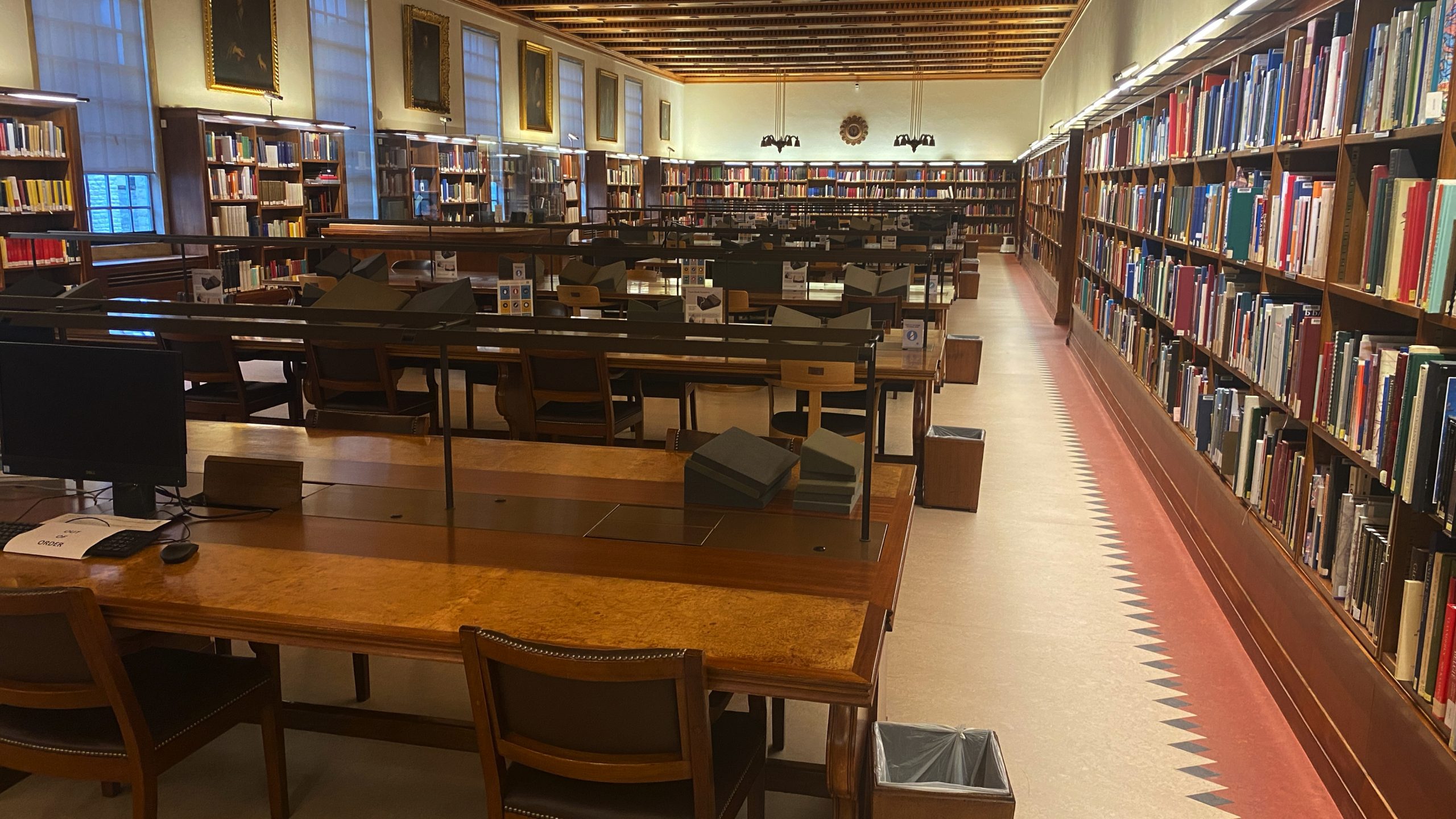
The venerated library at the University of Oxford is one of the oldest in Europe and houses the largest collection of pre-1500 printed books and parchment manuscripts. They have at least 105 Greek New Testament manuscripts, and potentially several more based on our most recent examination. Several documents are palimpsest manuscripts and will benefit greatly from multispectral imaging (MSI.) You can see the full list of manuscripts and their status here.
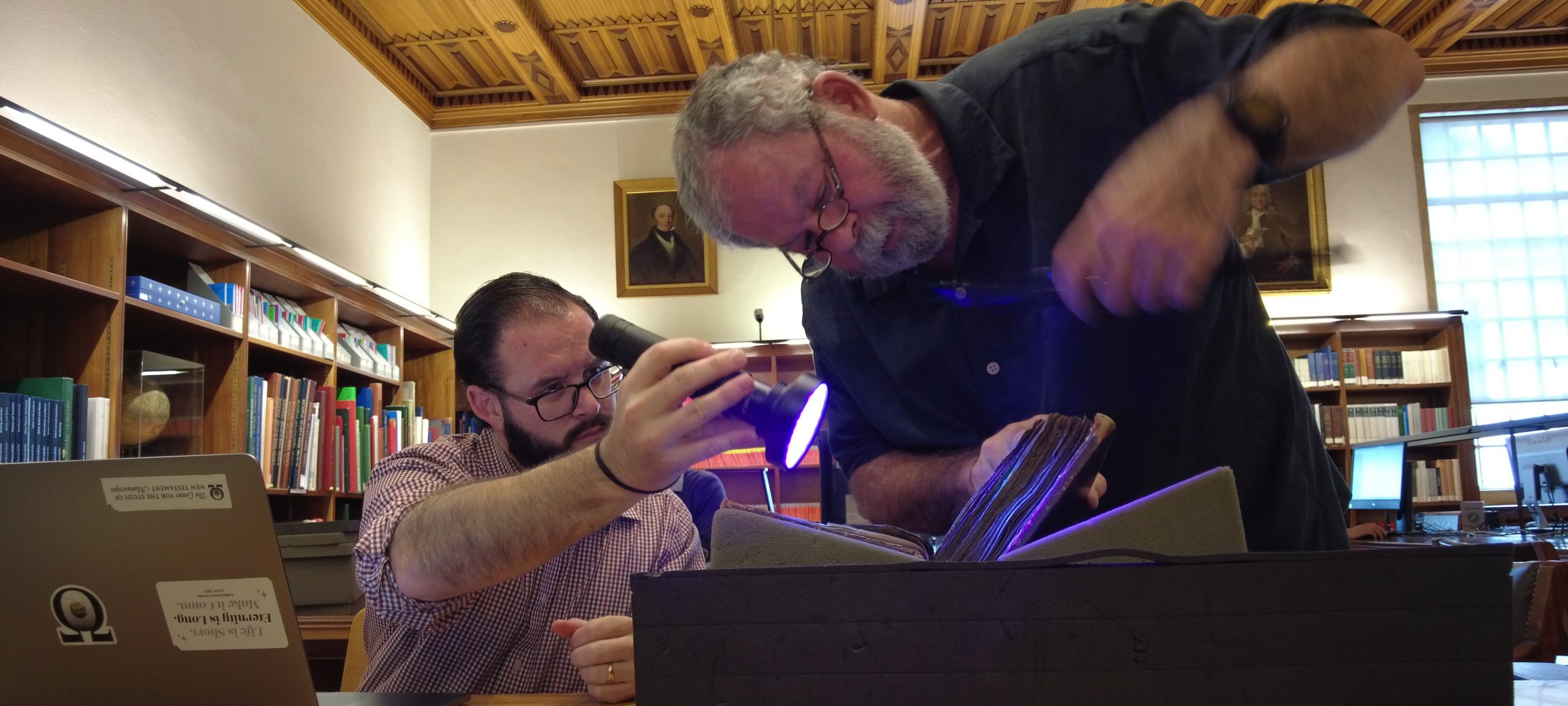
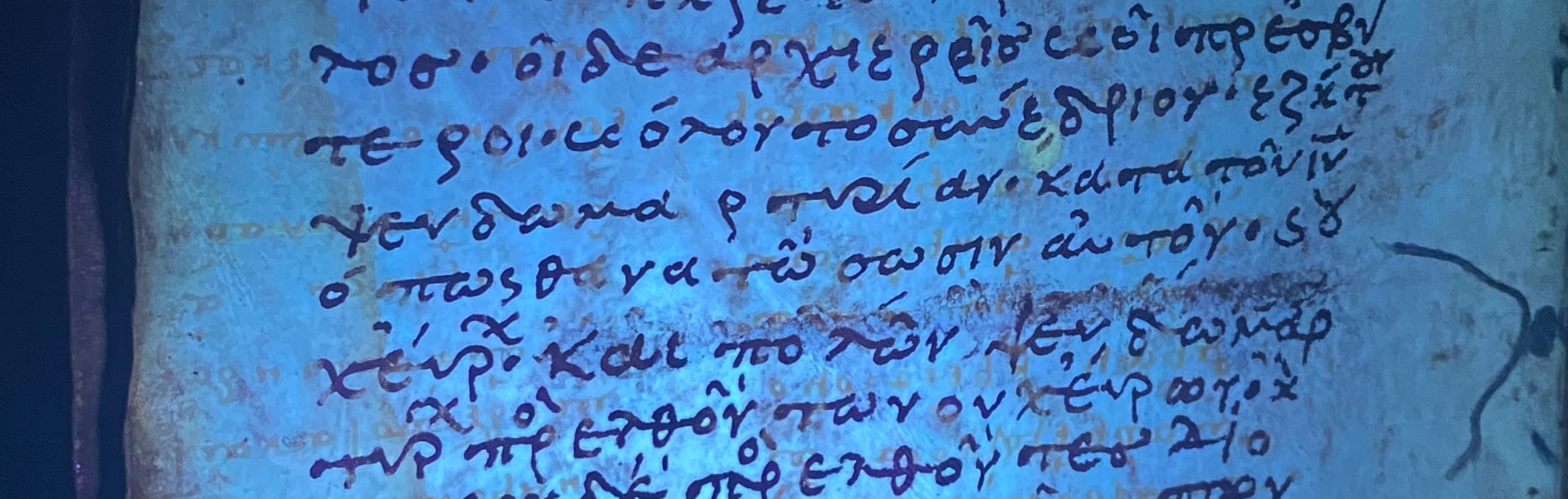
The first phase of any digitization project includes a detailed examination of each manuscript, during which we collect critical data. We measure the leaves and the binding at several points. We carefully count each leaf and note any additional material inserted or attached. We create a table of contents and describe important features, such as artwork, decorations, and writing in the margins.
An important part of examination is noting the possibility of palimpsest text, writing that has been scraped off to allow someone to reuse the parchment. Often, hidden biblical text lies beneath the visible handwriting.
Our team has completed the examination of all 105 manuscripts. Now, in collaboration with the Bodleian staff, we will digitize the entire collection.
Many of the manuscripts held at the Bodleian have never been digitized. In fact, many have never been photographed at all! These manuscripts will become new sources of data for scholars.

Objective One
Digitize at least 105 New Testament manuscripts to produce 40,430 high-resolution page images for the CSNTM Digital Manuscript Collection.
Objective Two
Identify palimpsest manuscripts and other candidates for multispectral imaging.
Objective Three
Solidify the collaborative partnership between CSNTM and the Bodleian Library.
CSNTM is seeking to raise $200,000 to complete the project.
Will you help bring these previously undigitized manuscripts to the world?