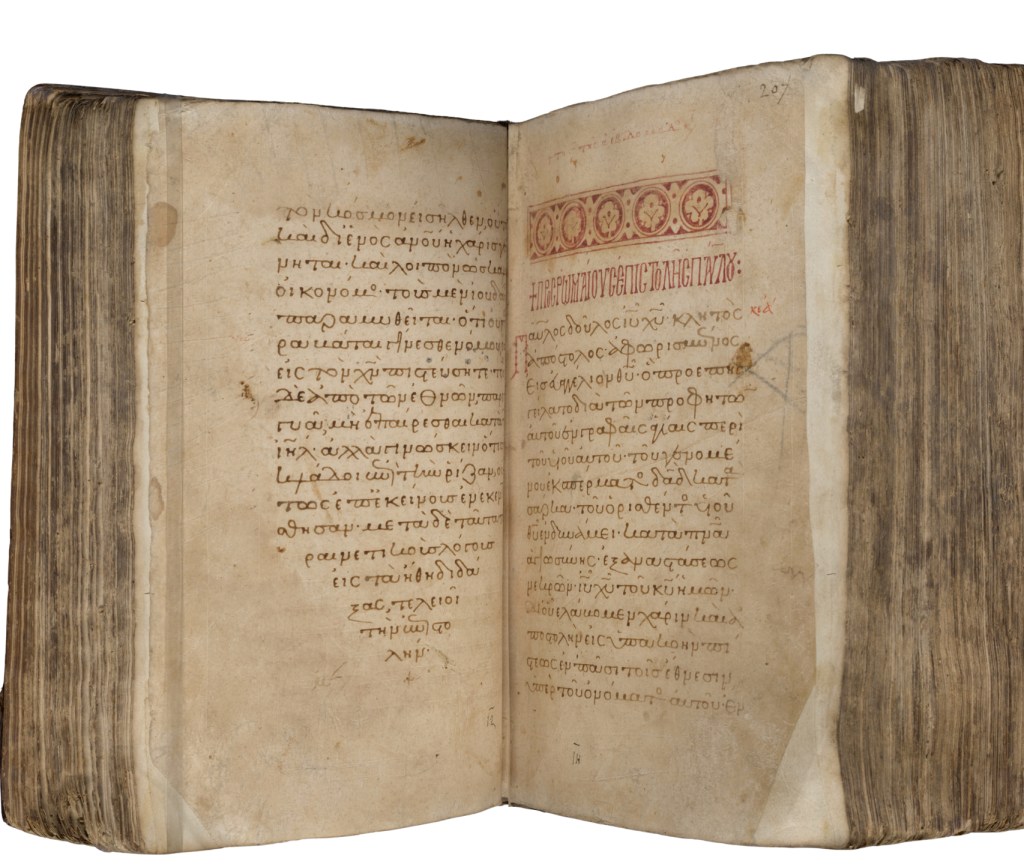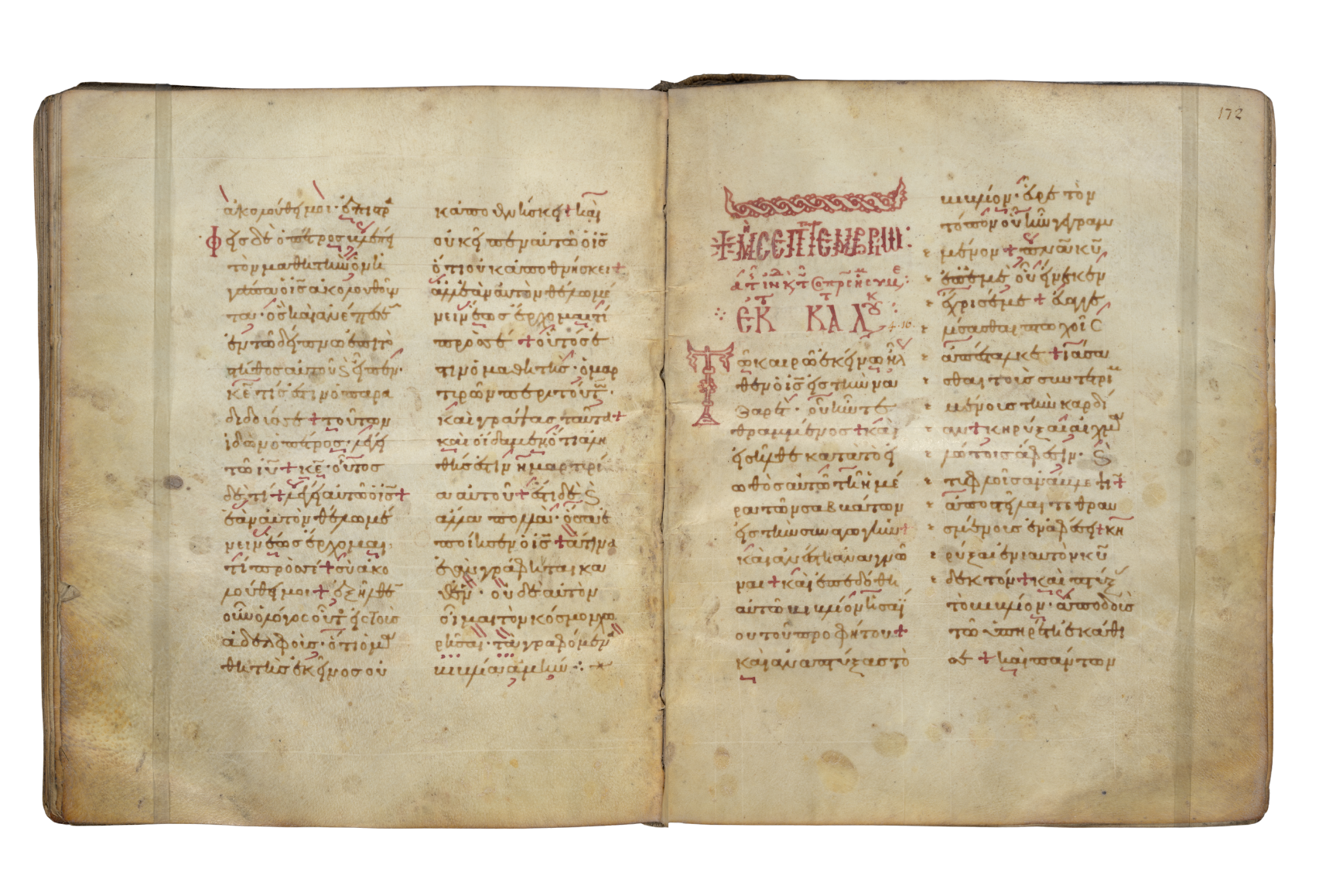
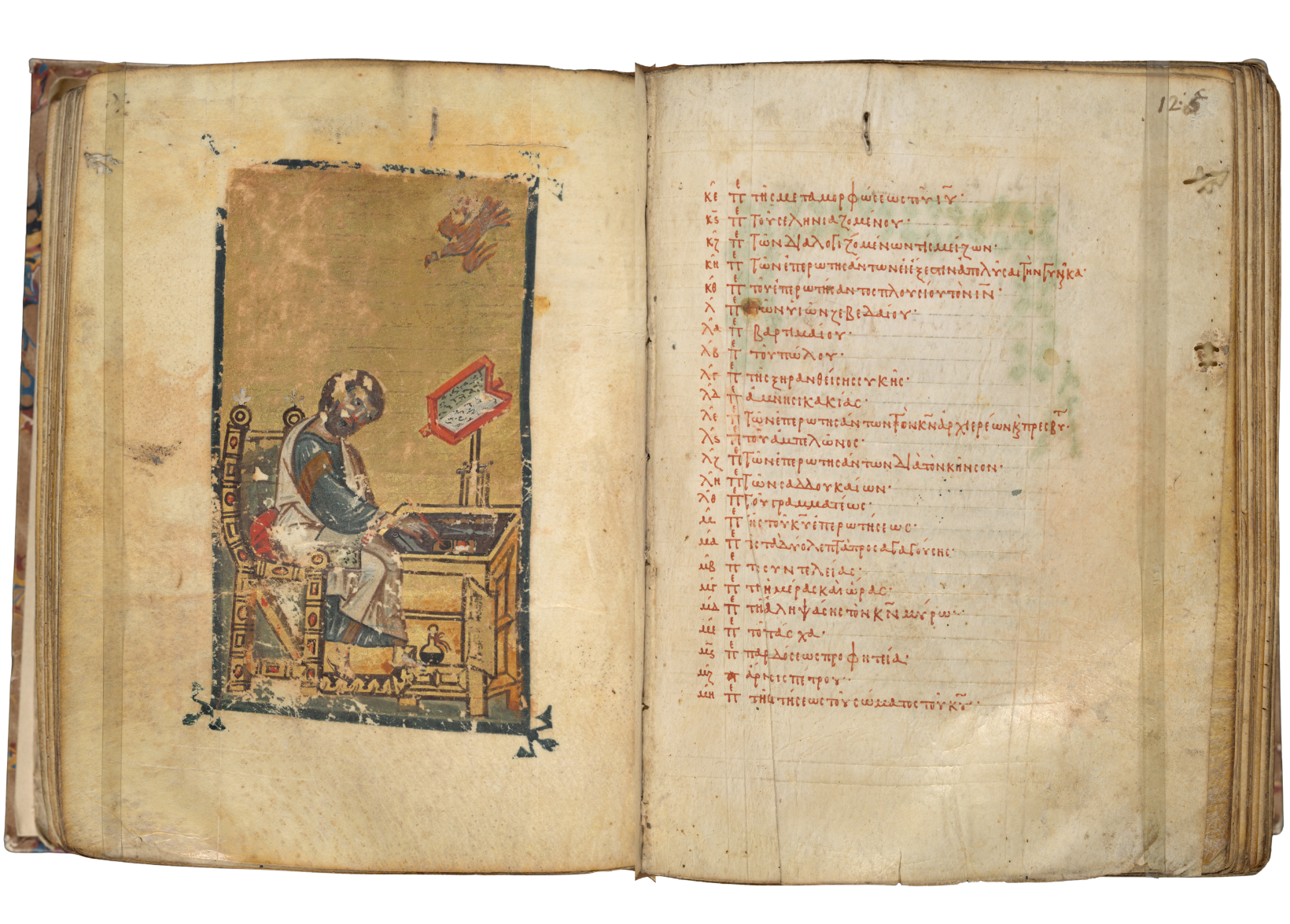
The following manuscripts were digitized by CSNTM at the Lambeth Palace Library in 2022. During this six-week expedition, our team digitally preserved more than two dozen Greek New Testament manuscripts, ensuring their worldwide accessibility for free, for all time.
As we continue adding manuscripts from this project, you can look forward to highlights of especially intriguing witnesses, including GA 98, as well as behind-the-scenes content from the expedition and the manuscripts’ journey from on-site examination to collections.csntm.org.
We invite you to explore the first official additions to our Digital Manuscript Collection, and stay tuned for more to come!
GA 470
11th Century
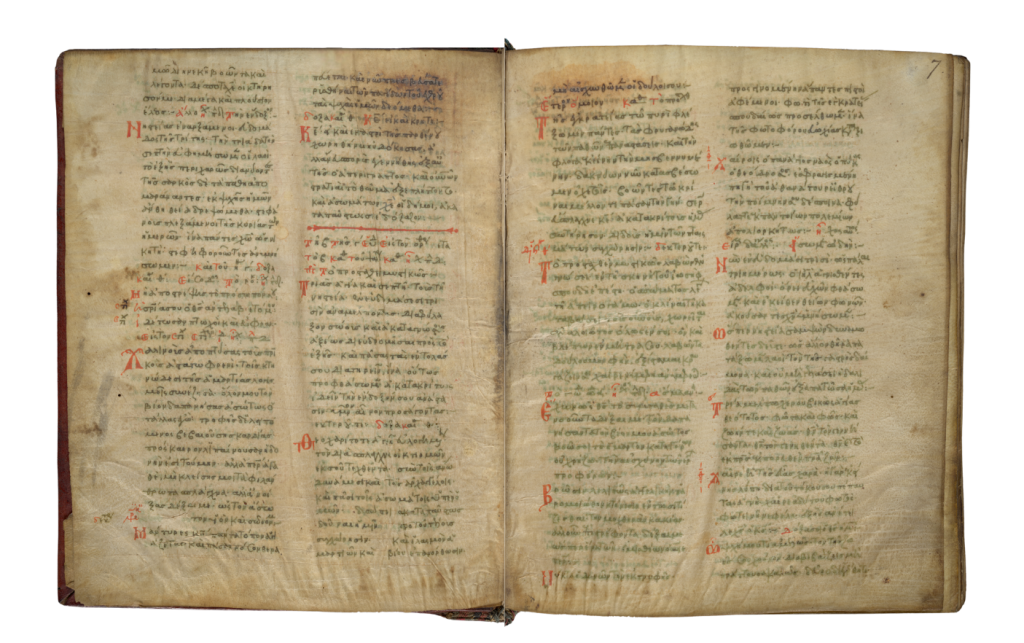
GA 470 is an eleventh-century minuscule Greek manuscript of the four Gospels. Fairly ornate headpieces at the beginning of each Gospel are preceded by list of kephalaia. The manuscript was owned by the Archbishop of Canterbury Charles Manners-Sutton (1755-1828) and Joseph Dacre Carlyle in the eighteenth and nineteenth centuries.
GA 471
11th Century
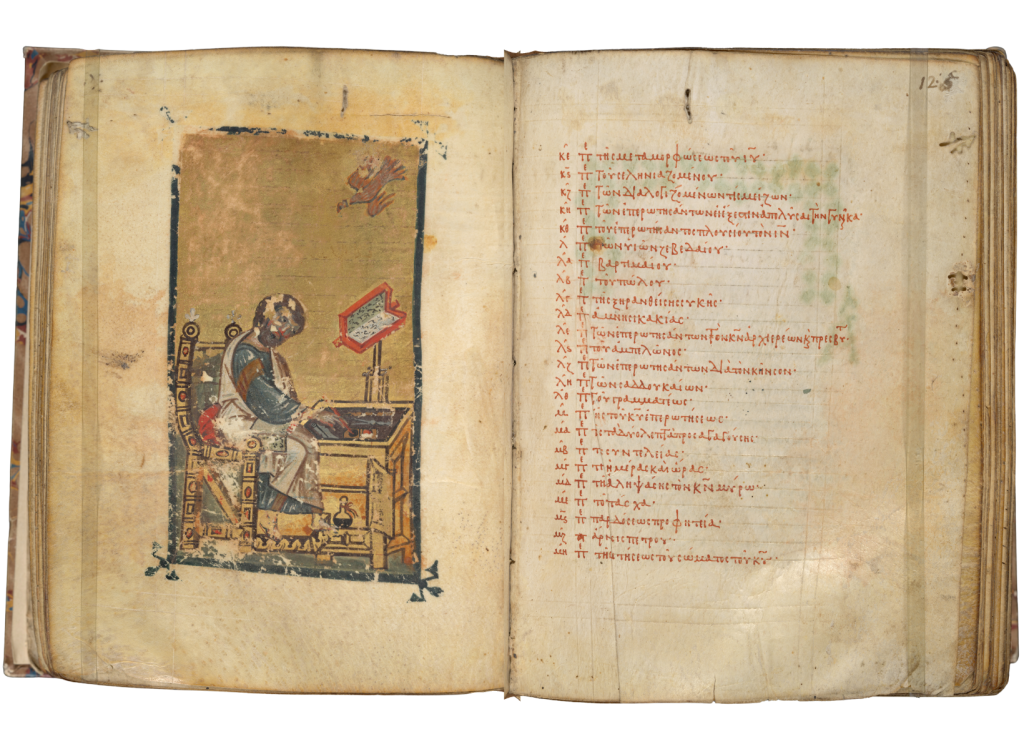
GA 471 is an eleventh-century minuscule Greek manuscript containing the four Gospels. Gospels are preceded by Evangelist portraits. Two full-page images were added later, one depicting Jesus laying in the tomb (f. 15r) and the other depicting the glorious resurrection (p. 323). At the beginning, the codex contains Letter to Carpianus, Eusebian Canon Tables, and tables of lectionary readings. At the end, the codex has a chronological account of the life of Jesus and the eleven appearances of Jesus after his resurrection. GA 471 was owned by the monastery, then by the Archbishop of Canterbury Charles Manners-Sutton (1755-1828), then Joseph Dacre Carlyle in the eighteenth and nineteenth centuries.